
Talent Playbook PortalExternal linkDonateDonate

Navigating Professional Environments with Intersecting Identities

Melany Justice, Associate | February 2022


In April of 2020, the CDC recommended mask-wearing in public to reduce the transmission of COVID-19. In the weeks that followed, I often pondered the metaphoric similarity between the “new” precaution of wearing a mask to remain safe in public and the long-standing precaution of wearing a “mask” while navigating professional workspaces given the many identities I carry. 

The notion of covering or concealing an aspect of one’s self was a recent phenomenon to some and yet just another layer added for too many of us. 

To Be Seen

Of all the identities I carry, there are three that often pose the cautionary question in professional environments of whether it’s safe to remove the mask. 

I am a Christian, I am a Black woman, and I am a first-generation professional. 

As organizations across the nation gain consciousness of the value and necessity to both acknowledge and appreciate the many identities their employees bring with them, it’s important to dually recognize the full spectrum and intersectionality of such identities, which can affect the degree to which staff feel safe being themselves at work.

In my personal experience, the murkiness and complexity of contemplating how much of myself would be embraced, understood, or valued if I were maskless in the workplace has generally resulted in inaction and introversion.

Many of us with these identities have opted to stay in our respective corners, concealing the most prominent aspects of who we are and looking forward to the relief, or fresh air, that comes at the conclusion of our workday. Meanwhile, colleagues and workplaces pride themselves on fostering environments where everyone can bring their full selves to work with limited insight into who we really are. In no way does this suggest that workplaces don’t have a genuine value and commitment to inclusivity, but rather that we may not yet feel conditions are safe enough to unmask. 

Before going any further, I’ll name that this does not suggest the experience of those belonging to any identity group is monolithic, nor that those sharing similar identities with me navigate professional environments in the same manner. 

The beauty in humanity is reflected in our multifaceted nature. We all have intersecting identities and they are all equally worth exploring. I, however, can only speak to the identities I possess.

To be Understood

As the proud daughter of a homemaker and custodian, I come from humble beginnings and was raised with the values of putting God first, working hard, minding my business, and speaking when spoken to, unless of course, I had indignation – at that point I was taught to stand for something or fall for anything.

The Center for the Study of Global Christianity at Gordon-Conwell Theological Seminary reports that there are over 40,000 Christian denominations in the world. The diversity that exists among and within religious groups and the subsequent experiences they entail leaves room for immense education but is often unexplored relative to topics of race, sexual orientation, and women in the workplace.

Nearly four in five Americans are affiliated with a form of religion. This research suggests that organizations may be filled with more religiously affiliated staff than they perceive. When determining which aspect of my identity to conceal at work, I’ve historically started with my faith and been least likely to share aspects of how it shows up in my daily life. Though almost four in ten adults attend religious services on a weekly basis, myself included, very seldom do I reference any religious activities I’ve taken part in when detailing my weekend with colleagues.

Though I and many friends have admittedly placed more thought towards uncovering what it means to be both Black women and first-generation professionals, which I’ll explore in a moment, many of us have yet to uncover what it means to be Christians in the workplace, even if our faith is in fact the most pertinent of all the identities we embody.

While more and more organizations observe various religious holidays, there seems to be an underlying tension that exists between openly discussing faith within the context of more socially acceptable identities. Throughout my career, I have always been fascinated by how much more interested colleagues were in the race and economic-related obstacles I’ve faced than in the faith I’ve held onto, which brought me through said obstacles. Given that, I ultimately resolved not to discuss the details of either and thus have yet to unmask.

To be Acknowledged

Gloria Ladson-Billings, former president of the American Educational Research Association and former Distinguished Professor of Urban Education at the University of Wisconsin-Madison, introduced the concept of an educational debt in 2006.

Her research suggests that the education debt “comprises historical, economic, sociopolitical, and moral components”. As a first-generation Black woman from a lower socioeconomic background, each component of the education debt outlined by Ladson-Billings resonates with me.

  • The historical debt considers the legacy of educational inequities in the United States, which continues to broaden the opportunity gap. 
  • The economic debt relates to the stark funding disparities between schools serving a predominant demographic of White students versus students of color, particularly African American students. 
  • The sociopolitical debt reflects the extent to which communities of color are disproportionately disenfranchised from participation in the civic process in ways that have suppressed their agency. 
  • And the moral debt reflects the tension between our societal belief of what is right that often runs counter with what we actually do. 

Acknowledging the identity of first-generation professionals, along with the intersectionality of those whose race, ethnicity, or socioeconomic background resulted in an education debt, means acknowledging their diverse and unequal starting points. There is an inevitable mental toll, the trauma of trying, that comes with navigating the lingering side-effects of the opportunity gap. 

Not only were we raised without access to the book of unwritten rules and corporate jargon used by our peers to maneuver in professional spaces, but the competencies and skills we developed growing up are often not as transferable or profitable for us to employ at work. Employees with such intersecting identities have undoubtedly faced a unique blend of challenges related to the opportunity gap that required perseverance and audacity in order to obtain and maintain their positions in the workplace, which is something their counterparts could never fully understand.

To Redefine Normalcy

As the nation continues working to contain the spread of COVID-19, we’re all working to redefine our concept of normalcy. Research and observation have proven the harmful risks of removing masks prematurely and ensuring environments are conducive to safety before doing so. It is my hope that organizations prioritize assessing their talent systems and practices such that it is truly safe for all employees to embrace their intersecting identities in the workplace, eliminating the need for such mandates in the future.

____

In honor of Black History Month, I’d like to pay special tribute to Paul Lawerence Dunbar, one of the pioneering Black poets in American literature. 

We Wear the Mask

By Paul Laurence Dunbar

We wear the mask that grins and lies,

It hides our cheeks and shades our eyes,—

This debt we pay to human guile;

With torn and bleeding hearts we smile,

And mouth with myriad subtleties.


Why should the world be over-wise,

In counting all our tears and sighs?

Nay, let them only see us, while

       We wear the mask.


We smile, but, O great Christ, our cries

To thee from tortured souls arise.

We sing, but oh the clay is vile

Beneath our feet, and long the mile;

But let the world dream otherwise,

       We wear the mask!

____

Resources 

Religion in the Workplace

Supporting First-Generation Professionals 


 1Maldonado, B. (2019, October 24). 4 insights about the first generation professional experience. LinkedIn. Retrieved from https://www.linkedin.com/pulse/4-insights-first-generation-professional-experience-bernice-maldonado 
2 Tanenbaum. (2021, July 1). Eight Steps to the Accommodation Mindset. https://tanenbaum.org/about-us/what-we-do/workplace/workplace-resources/eight-steps-to-the-accommodation-mindset/

3 “Nones” on the Rise. (2020, May 30). Pew Research Center’s Religion & Public Life Project. https://www.pewforum.org/2012/10/09/nones-on-the-rise/ 

4Nones” on the Rise. (2020, May 30). Pew Research Center’s Religion & Public Life Project. https://www.pewforum.org/2012/10/09/nones-on-the-rise/ 

5The Education Debt. (2018, November 20). National Education Policy Center. https://nepc.colorado.edu/publication/newsletter-education-debt-112018#:%7E:text=Gloria%20Ladson%2DBillings%20coined%20the,directed%20at%20students%20of%20color 

 6Ladson-Billings (2006) From the Achievement Gap to the Education Debt: Understanding Achievement in U.S. Schools.

7Opportunity Gap. (2021). Close the Gap Foundation. https://www.closethegapfoundation.org/glossary/opportunity-gap

8Maldonado, B. (2019, October 24). 4 insights about the first generation professional experience. LinkedIn. Retrieved from https://www.linkedin.com/pulse/4-insights-first-generation-professional-experience-bernice-maldonado 
How School Leaders Can Show C.A.R.E for Staff Wellbeing

Nicole Roberts Pratt

January 27, 2022


As we start another year of the pandemic, there’s been the usual New Year’s focus on wellness – how are we individually going to take better care of ourselves (start an exercise routine, eat healthier, etc.).  I have also seen some of the focus shift from wellness (which often refers to physical) to wellbeing.  The American Psychological Association defines wellbeing as “a state of happiness and contentment, with low levels of distress, overall good physical and mental health and outlook, or good quality of life.” I like the simpler definition of wellbeing as the combination of feeling good and functioning effectively. Over the last few months, our blog has featured posts on many topics related to wellbeing: gratitude, psychological safety, and adult regulation.

We’ve created an acronym, CARE, to support school leaders to quickly reflect on how to support staff wellbeing.

  • Create Opportunities
  • Alleviate Pressure
  • Regularly Check-In
  • Ensure Inclusion

Educators in all roles across the country have worked extremely hard throughout the pandemic to support students in a variety of ways, many of them new. Research has shown that elevated teacher stress leads to negative impacts, not just for the teacher but also for students such as increased negative teacher-student interactions and relationships, lower levels of student engagement, and ultimately less learning. Teacher wellbeing is important both for themselves and for their ability to effectively support and teach their students.

While wellbeing is unique and often deeply personal, there is also a role for schools to play. School and district leaders can create the policies, procedures, and culture that support staff wellbeing. Also, keep in mind that supporting wellbeing isn’t solely about reducing negative experiences (though that is important) it can also be accomplished through creating positive experiences. There are many ways to think about wellbeing. We’ve created an acronym to help guide your reflection and included real examples from schools from our work across the country. 

Create Opportunities 

Key Question: How are you creating intentional opportunities to support staff wellbeing through new or updated initiatives and actions?

Examples and Strategies:

  • One school converted a half professional development day to a wellness day where staff could opt-in to various wellness activities such as yoga or soccer.
  • Another school added new low-cost counseling sessions to their Employee Assistance Program.

Alleviate Pressure

Key Question: How are you finding ways to reduce extra burdens on staff and free up more time?

Examples and Strategies:

  • One school reviewed all standing meetings (like staff meetings) and identified which were essential and what could be covered in another way (i.e. shared via email) to free up teacher time to focus on instructional responsibilities.
  • One school provides teachers with additional planning time through the creative use of funding and staff. While teachers are engaging in collaborative planning time with colleagues, their students are engaging in arts-integrated and literacy-focused learning experiences facilitated by the school’s enrichment (specials) team.
  • As a leader, model and honor business hours communications to help folks unplug and recharge when possible. Schedule send is a great tool for this!

Regularly Check-In

Key Question: When was the last time you talked with each member of your staff and created space for them to share how they are doing and what they need?

Examples and Strategies:

  • In another school, the leadership team agreed to start every check-in with staff by asking the person how they are doing – really doing – and making space for that as a primary purpose of the time.
  • Gather staff experience data and take action in response to what is shared – prioritizing staff feedback and action in response.

Ensure Inclusion

Key Question: How are you differentiating support based on what different individuals and groups need?

Examples and Strategies:

  • Everyone’s situation is different and what they need to feel supported may also be different. Create an inclusive approach by talking to individuals to get a better understanding of what types of support each person needs to inform your plan.
  • Another school we work with implemented a differentiated approach for meeting staff needs around sick leave. Staff had the option to rollover additional sick leave from one year to the next or the school could buy back some sick leave. Giving staff options allows staff to choose for themselves what is most beneficial based on their unique needs.

Where has your school focused so far? Tag us @EdFuelOrg and let us know how you’re showing CARE for your teachers and staff. By thinking through how you show CARE, you can identify strengths in your current approach and additional areas to explore and strengthen as you continue to support staff during this challenging time.


References

American Psychological Association. (2022, January 18). Dictionary. Retrieved from American Psychological Association : https://dictionary.apa.org/well-being 

Huppert, F. A. (2009, June 5). Psychological Well-being: Evidence Regarding its Causes and Consequences. Applied Psychology: Health and Well-Being, 1. Retrieved January 18, 2022, from https://iaap-journals.onlinelibrary.wiley.com/doi/10.1111/j.1758-0854.2009.01008.x 

Sparks, S. D. (2017, June 7). How Teachers’ Stress Affects Students: A Research Round-up. Education Week. Retrieved January 18, 2022, from https://www.edweek.org/education/how-teachers-stress-affects-students-a-research-roundup/2017/06

The Need for Organizational Policies & Processes

Sara-Kate Roberts

December 6, 2021


About a year and a half ago, I became a mother. I joined the world of working parents, who have always juggled multiple priorities, but who have faced increased challenges during the COVID-19 pandemic.

I am lucky to work for an organization that honors my dual roles as a parent and professional. As my family has been introduced to daycare germs and worked through a required quarantine, I have been supported to take the time off that I needed. One of EdFuel’s guiding principles is Sustainability for each of our employees, and this value has been reinforced for me through our written leave policies, as well as through managerial practices.

DO YOUR WRITTEN POLICIES ALIGN WITH YOUR VISION FOR CULTURE?

The Society for Human Resource Management states that “the key to a successful organization is to have a culture based on a strongly held and widely shared set of beliefs that are supported by strategy and structure.”

Written or unwritten, your organization most likely has rules, and your employees have intuited them. But if you don’t have a common, comprehensive, and clear set of organizational policies, you might find that the lived experience of your staff is not aligned with the culture you hope to create. For example,

  • A similar situation may result in two different outcomes for two different employees, leading to confusion and dissatisfaction for one or both.
  • This may also mean that some employees – consciously or unconsciously – are being advantaged over others.
  • You may have simply outgrown some of the policies that governed your organization previously – our practices have certainly evolved over the past two years!

We speak with leaders every day about the kind of environment they hope to create for their employees, and the situations described above do not reflect what most leaders want to be true. For example, we have heard the desire to:

  • Provide clarity and continuity whenever possible (in a world where these things seem increasingly elusive)
  • Treat each employee as a complex and complete human being, with needs to be met both inside and outside the workplace (or virtual space)
  • Live out an ongoing commitment to Diversity, Equity, Inclusion, and Antiracism
    One way to start living up to these ideals is to holistically examine your organization’s policies, processes, and practices, and make adjustments where necessary.

USE THE EDFUEL ORGANIZATIONAL POLICY TOOLKIT TO REINFORCE YOUR CULTURE IN PRACTICE AND IN WRITING

To help you do that, we have developed and are excited to release the EdFuel Organizational Policy Toolkit, a people-centered approach to defining human capital policies. The Toolkit includes:

  • A process you can follow to create an employee handbook or policy manual, whether you are crafting organizational policies for the first time or conducting an audit on practices that have been in place for awhile
  • A system to review your current policies to see if they meet the needs of your workplace and workforce, including promoting Diversity, Equity, Inclusion, and Antiracism
  • Tools to help you research, write, and communicate any new policies you may need to create
  • Checklists at every step to ensure you have covered all of your bases

We must be clear: these tools alone won’t make your workplace everything you want it to be. Having a fair and consistent set of rules is only the foundation, and the work to roll out your policies and ensure their consistent implementation is ongoing. But if your employees feel the gratitude to you that I do to EdFuel, it will be worth it.

LET’S GET STARTED

Our toolkit is designed such that you can pull the resources right from our website and begin applying the guidance today. However, we know this can feel like daunting work, and we are also available to provide shoulder-to-shoulder support for you if you want more guidance as you take on this initiative. EdFuel provides dedicated support in each of the areas listed in the toolkit, please reach out to us at info@edfuel.org if you are interested in discussing a customized engagement with a member of our team. We look forward to hearing from you!

Psychological Safety: One ingredient in the recipe for teacher and student wellbeing

Kristina Campa-Gruca

October 27, 2021


Teacher dissatisfaction has skyrocketed over the past year and a half, with one-in-four teachers indicating a desire to leave the classroom within the next year.1 Extraordinarily high levels of stress have led to a dramatic increase in burnout and overall decrease in mental health and wellbeing.2 

We know from our work with partners across the country how the pandemic is taking a toll on the mental health and wellbeing of teachers. The numerous factors that contributed to employee dissatisfaction prior to the pandemic have been magnified over the last year and a half. They include:3 

  • Very high workload (often unrealistic) 
  • Poor work/life balance  
  • Frequent organizational change  
  • Lack of resources  
  • Unreasonable demands from managers  
  • Not feeling valued or appreciated  

Because there remains uncertainty about what the future holds for schools as the pandemic wanes, it is imperative that leaders address these issues head-on to prevent an exodus of their teachers. In some organizations, leaders have been able to provide additional compensation, mental health benefits, flexible schedules, opportunities for remote work, and other interventions meant to increase wellbeing. And, we also know that many organizations do not have the same resources or ability to offer these benefits. 

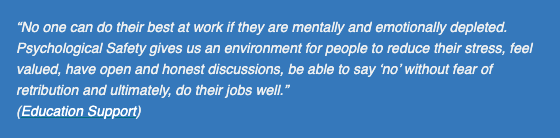
Regardless of the availability of resources for additional monetary benefit leaders must work to create a culture of psychological safety, one that provides staff members with the safety to share their perspectives, failures, and be fully open with their teammates and leadership

A school with high psychological safety is positively correlated with wellbeing, creativity, innovation, effectiveness. Indeed, Gallup found that cultivating psychological safety can have a significant positive impact when a majority of staff perceive the organization as psychologically safe: a reduction in employee turnover by as much as 27% and an increase in productivity by as much as 12 percent.4,5

This isn’t just for the adults in the building. The benefits of psychological safety also extend to students. Research has shown there to be a positive correlation between a teacher’s psychological safety at school and student levels of self-confidence and learning.6 

Strategies to cultivate psychological safety in your organization 

  • Assess the level of psychological safety among staff using the seven questions below.7 (Note: Endorsing the first four statements would indicate a sense of psychological safety, and the last three indicate the opposite.)
    1. Teachers at this school are able to bring up problems and tough issues.
    2. Teachers at this school feel it is safe to take a risk (e.g. trying something new in the classroom).
    3. No teachers at this school would deliberately act in a way that would undermine my teaching.
    4. Working with teachers at this school, my unique skills and talents are valued and used.
    5. If you make a mistake at this school, it is often held against you.
    6. People who work at this school sometimes reject others for being different.
    7. It is difficult to ask other people who work at this school for help. 
  • Analyze the data using multiple vectors to identify any differences by demographic sub-group (e.g., position, gender identity, race, and ethnicity). Understanding how psychological safety is experienced by different staff sub-groups will enable you to answer the hard questions: “Are team members of a certain race or ethnic group more or less likely to feel psychologically safe?”; “To what extent are differences correlated with certain managers or departments?”; and others.
  • Identify strategies for increasing psychological safety that are relevant to feedback from your staff, and ensure those strategies are modeled by leaders and managers. Leaders have a significant influence on the organizational culture and on staff member wellbeing. Staff members must feel supported by their leaders and managers. Some actions leaders and managers can take to facilitate psychological safety among their staff members are8:
    • Show your humanity and be willing to be vulnerable: name when you don’t have the answers or when you feel challenged and motivated
    • Acknowledge the reality of workplace challenges – and demonstrate commitment to working through them together; invite team members to share their perspectives and ideas for navigating common challenges
    • Talk about mental health and wellbeing regularly in whole groups and one-on-one with managers
    • Actively discourage habits which harm staff mental health – working excessive hours, working on weekends/holidays (e.g., give time back wherever you can (cancel meetings, give workdays as days off)
  • Show appreciation and gratitude
    • Have a human moment in each of your meetings with school leaders and/or teachers and ask them what they need (and task for instructional coaches and VPs to do the same)
    • Ask the parent association to organize ongoing celebrations for school staff. This could be things like coffee and donuts, but also non-monetary actions like thank you notes or video messages from parents and students.
    • Give and invite feedback regularly in the moment and in intentional, structured processes.

We are interested in hearing from you: is your organization a psychologically safe one? How will you commit to fostering a psychologically safe culture for your team members?


1While teachers are indicating a desire to leave, research shows that they are not actually leaving. We use the desire to leave as a proxy for overall dissatisfaction with their work. 

2Kaufman, Julia and Melissa Diliberti. (2021) Teachers are not all right: How the COVID-19 pandemic is taking a toll on the nation’s teachers. Center for Reinventing Public Education. 

3Education Support UK. (2021). Psychological Safety in Schools.

4Herway, Jake. (2017). How to Create a Culture of Psychological Safety. Gallup Workplace. 

5Edmonson, Amy. (2018). How Fearless Organizations Succeed. strategy + business. 

6InnerDrive. Psychological Safety in the Classroom.

7Wanless, Shannon and Dana Winters. (2018). A Welcome Space for Taking Risks. Focus Social and Emotional Learning, 39(4), 41-44.

8Education Support UK. (2021). Psychological Safety in Schools. 


The Gift of Gratitude

Mary Mason Boaz

September 30, 2021


If you’ve spoken to an educator in your life recently, you may have heard the same sentiment that I have: “This year is harder than last year”. Among other things, they’ve noted the lack of stability, the ever changing list of quarantines, and the overwhelming risk assessments they have to make nonstop every day. We can’t wait until teacher appreciation week to show the educators in our lives that we care, that we see them, and that we value them. How are we, as a community, supporting them through this incredibly challenging time? How are we showing them how grateful we are? How are we connecting to their humanity? One small way we can do this is through individual and collective gratitude. 

HOW GRATITUDE KEEPS ME GROUNDED

Gratitude has been a tool that therapists have suggested to me since I was 10, when I first started seeking treatment for my anxiety and is something that I have loosely kept up with over the years. About 9 months ago, upon recommendation by my therapist, I recommitted to incorporating a daily practice of gratitude after many discussions about the severe levels of stress I was navigating in this pandemic-era with a toddler, a newborn, a full time job, and a parent in the high risk category for severe COVID complications. The constant daily risk analysis was overwhelming and paralyzing. So I’ve been trying it out. At home around the dinner table, we try to each share one thing we are grateful for. My one year old usually just throws food on the floor and babbles, but my partner, my 4 year old, and I each often take the opportunity to share. Does it happen every night? Certainly not. But over the past 9 months I have been reminded that these types of practices, while small, have always shown me the power of gratitude in lifting my mood, bringing joy to others, and alleviating stress. 

Brene Brown often shares an excellent quote from a Jesuit priest that says, “It’s not joy that makes us grateful, it’s gratitude that makes us joyful.” A lot of research exists about the positive benefits of gratitude, including improved mental and emotional health, physical health, relationships with others, and optimism. While there is less research focused explicitly on gratitude in the workplace, “studies suggest that gratitude may help employees perform their jobs more effectively, feel more satisfied at work, and act more helpfully and respectfully toward their coworkers.”1 In summary, practicing gratitude can be extremely beneficial for both the giving and the receiving party.

EDUCATORS NEED GRATITUDE NOW MORE THAN EVER

We need to show gratitude now more than ever, not just for ourselves, but for the educators in our lives. Last year, school leaders and teachers had to learn an entirely new way of doing their jobs (virtually), many with their own children at home or caring for dependents. And yet, this year feels even harder to them. In addition, there are often added layers of challenge for BIPOC staff members who may be faced with structural and/or interpersonal racism within their school buildings on top of the layers of pandemic-related stress and trauma (which at a societal level have disproportionately impacted people of color). 

As a parent, organizational leader, former teacher, and active community member, I am constantly thinking about large-scale structural changes that need to be made in this sector. Many of them keep me up at night: How can we pay teachers more? How can we create safe working environments for BIPOC staff members? How can we reimagine the structure of K-12 education so that teachers have flexibility in their work days and students can learn at the highest levels? The list goes on and the work on systemic issues continues. But we are also in an urgent moment where the educators in our lives need us to take quick and concrete action. 

SO THE QUESTION BECOMES: THIS FALL, HOW WILL YOU SHOW GRATITUDE TO THE EDUCATORS IN YOUR LIFE? 

With the help of the EdFuel team, I’ve outlined some actions that you can take immediately to embrace and support the whole beings that are the educators in your lives. It can feel overwhelming with where to start. As a full-time, working parent during this pandemic, I know how depleted I tend to feel at the end of each day. But I’ve learned that it is ok to start small and think about what you can take on in this current moment. September and October mean back-to-school season and parent-teacher conferences. This fall, I plan to write thank you notes to each of my childrens’ teachers and their school director, while also asking them what they need to feel supported. As a white, cis, straight, 2w3 on the enneagram, woman (along with many other identities), I don’t share the same identity markers as all of my childrens’ teachers and so I want to ask rather than assume what they might want, need, or appreciate. I also commit to reaching out to the parent community through our school listserv to brainstorm ways to show our gratitude to our incredible teachers and school leaders. 

It is important to note that there is not a one-size-fits-all approach to gratitude. One of our priorities at EdFuel is supporting schools to operate with anti-racist talent practices. Part of this work involves creating “a sense of restored community and mutual caring”2. This  involves truly listening to and understanding what each individual needs, as opposed to making assumptions, and coming together as a community to meet those needs wherever we can. Especially for educators who have identity markers that are different from your own, reach out and ask, don’t just assume.

I certainly don’t mean to suggest that this is enough. There are absolutely structural changes that need to be made to value teachers more, pay them more, create safe spaces, offer them flexibility and the chance to rest, have manageable class sizes, and be allowed some creative license to meet the needs of their unique students. This is a “yes, and” situation. That is all true, yes. AND each of us also needs to take a few minutes, wherever we can, and practice gratitude for the educators in our lives.

Check out the list below if you don’t know where to start: 

If you are an organizational or school leader:

  • Schedule school leader and teacher well-being touch points into your talent calendar (EdFuel)
  • Give time back wherever you can (cancel meetings, give workdays as days off)
  • Have a human moment in each of your meetings with school leaders and/or teachers and ask them what they need (and task for instructional coaches and VPs to do the same)
  • Incorporate aspects of the PERMA model (daily gratitude, music, walks outside, practicing being present in the moment)
  • Write thank you notes to each of your school leaders and/or teachers
  • Ask the parent association to organize ongoing celebrations for school staff. This could be things like coffee and donuts, but also non-monetary actions like thank you notes or video messages from parents and students.
  • Bring humor, joy, and music whenever you can (Elena Aguilar, Onward: Resilient Educators, Thriving Schools)
  • Create a daily practice of gratitude for yourself, your school, or the organization as a whole
  • Work with the team to create a plan for class coverage when teachers need to be out for their own childrens’ quarantines
  • Consider creating an ’“emergency staff fund” for any unexpected expenses that arise as a result of the pandemic (e.g., hiring babysitters, caring for aging parents, car repairs, etc.)’ (Chastity Lord, Jeremiah Program)

If you are a parent and/or community member:

  • Organize with the parent association to bring teachers coffee, bagels, and other types of food or non-monetary actions like thank you notes or video messages from parents and students. (This does not need to wait until teacher appreciation week)
  • Write a thank you note to a teacher and a principal 
  • Go to your local school board meeting and bring up the issue of teacher well-being
  • Ask your local principal how you can help support during this time
  • If you have children in your life, ask their teachers how they want to be supported (ask rather than assume) 

Please share how you’re practicing care and gratitude for yourself, your families, your colleagues, and your educators this back-to-school season and tag us on Instagram @EdFuel or on Twitter @EdFuelOrg.


1 Allen, Summer. “The Science of Gratitude”. Greater Good Science Center. May, 2018. https://ggsc.berkeley.edu/images/uploads/GGSC-JTF_White_Paper-Gratitude-FINAL.pdf

2Crossroads Ministry, Chicago, IL: Adapted from original concept by Bailey Jackson and Rita Hardiman, and further developed by Andrea Avazian and Ronice Branding; further adapted by Melia LaCour, PSESD. https://philanos.org/resources/Documents/Conference%202020/Pre-Read%20PDFs/Continuum_AntiRacist.pdf

The Things We Carry: The Importance of Adult Regulation In the Midst of School Reopenings

Kelly Gleischman

August 27, 2021


I’ll start by stating the obvious: The collective trauma and grief that we have experienced over the last 18 months is profound – and ongoing. The effects of COVID-19 on our society overall are monumental in their scope and the implications for the education sector are just as colossal. As this school year starts, and most systems return to full-time in-person learning, we are currently attempting to modify an existing system to fit a reality that is entirely unlike anything that most of us have experienced in our lifetime. Leaders are carrying an enormous weight of responsibility on their shoulders every waking minute of the day, navigating an overwhelming amount of complexity and uncertainty while attempting to ensure school buildings are safe for students and staff.  Many leaders and staff members have shared with me that this school year is already much more difficult than last year, which feels unsurprising: We are attempting to renegotiate our entire way of doing in-person learning while our bodies are simultaneously carrying the weight of heightened anxiety that comes with living through continued collective trauma and ongoing grief.

Many of us in education have learned or studied how trauma impacts the development of a child. The ACE studies are often the most well-cited; for those unfamiliar, these studies demonstrate that adverse childhood experiences (ACEs) are linked to higher rates of physical and mental health problems. As the CDC notes, the greater the number of ACEs a child has experienced, the higher the likelihood of subsequent challenges such as addiction, maternal and child health problems, involvement in sex trafficking, heart disease, depression, cancer, and suicide1.

Healthy relationships in safe environments are ultimately what prevent ACEs from occurring in the first place. And, importantly, ongoing healthy relationships are key for students who have already experienced ACEs to be able to process through these events in a way that minimizes the likelihood of negative outcomes. As the CDC itself states, “Creating and sustaining safe, stable, nurturing relationships and environments for all children and families can prevent ACEs and help all children reach their full potential.”

So if we know that healthy and safe environments with strong positive relationships are ultimately what allow kids to live whole and happy lives, the question becomes: How do we ensure our school environments, where students spend the majority of their waking hours, provide kids with that level of safety and security?

Turning to Adults: The Critical Importance of Understanding Trauma Research
If we care about building safe and healthy environments for students, we have to first look at the very people who are responsible for building that type of culture. The reality is that a dysregulated adult cannot regulate a child. Teachers, leaders, and other school staff across our country have always faced massive amounts of pressure and responsibility, most often with very little recognition and even less reward. But in this COVID era, they are also shouldering their own experiences of grief and wading through the heaviness of ongoing collective trauma while being asked to serve as the primary regulators for the kids in their care. When we add on the layer of systemic and interpersonal racism that continues to face people of color in this country, the weight of the difficulty is profound. Parents all over are facing the same challenges and have the same daunting task. But my focus is on our school staff right now, and we need to recognize the critical importance of regulation if we truly care about giving children in school what they need. Because if we don’t understand and address the massive mental health implications facing school staff currently, we will limit the amount of learning and development for students and risk even greater levels of burnout and attrition in the future.

It starts first with understanding: We are naïve to think we can simply move forward from the pain we have experienced over these last 18 months (and indeed are continuing to experience) without recognizing the impact it has had on our very being. A fundamental point of understanding is that trauma is stored in our bodies. In “The Body Keeps the Score: Brain, Mind, and Body in the Healing of Trauma”, Dr. Bessel van der Kolk walks through a comprehensive study on the profound impact of trauma on the body. Essentially, when under perceived threat, our brains and our nervous system are quite intelligent in how they respond – and while that intelligence may serve useful in the moment, it also can create more sensitized stress response systems that are heightened in their reactivity even after the traumatic experience is over (which in this case, it’s unfortunately not).

A summary: The brain is constantly taking in signals from the outside world (through the thalamus), and these signals get sent to the amygdala (in the lower brain, where the recognition is unconscious) as well as the frontal lobes (which is where we ultimately consciously recognize the signal). The amygdala is the part of the brain that signals potential danger (the signal arrives to it before the frontal lobes), and it does so by alerting the hypothalamus and the brain stem, which triggers our autonomic nervous system into responding. The sympathetic nervous system (one of the branches of the autonomic nervous system), may activate in the face of this perceived threat (the “fight or flight” responses many have heard about) or in the face of extreme threat, the parasympathetic nervous system (the other branch of the autonomic nervous system) may cause shutdown (the “freeze” response).

The short version is that traumatic experience can often mean more active stress responses (both in the moment and also post-event, if we don’t process the trauma effectively). Being dysregulated essentially means that we are existing in one of those stress response states. For those working in education, you likely know what it feels like when you are in a dysregulated state – and the impact it can have on your ability to be attuned to a child (or a whole classroom’s) needs.

The idea is that we need to know why our body is responding in a certain way if we’re going to actually be able to self-soothe. And it all goes to the end goal: we have to understand how our bodies process traumatic experiences (and the impact it has on ongoing function) if we are going to be able to support students in their own learning and development.

But recognizing the impact is only part of the battle. Actually learning how to self-regulate in moments where our trauma responses have kicked in is incredibly challenging – but ultimately is the key to becoming better teachers, leaders, partners, friends, and people.

How Can We Approach Adult Self-Regulation?
While there is an abundance of fascinating and groundbreaking research out there on tools to heal from trauma (and self-regulation in the face of stress responses in general), a few, in particular, stand out to me: movement and connection. On the movement front, Dr. van der Kolk says that “dissociation is the essence of trauma.”And if dissociation – removal from oneself – is the essence of trauma, then reconnection with one’s self (both physically and psychologically) is a critical part of the healing process. Many recent breakthroughs in trauma research have helped to illuminate that interventions such as yoga, dance, somatic experiencing, healthy touch, and other types of movement can be incredibly helpful in supporting people to reduce sensitization and increase self-regulation.

Another one of the keys to building resiliency (as opposed to sensitization) is our level of connection with others. In “What Happened to You? Conversations on Trauma, Resilience, and Healing”, Dr. Bruce Perry notes that “The capacity to get back to “baseline” after a trauma is influenced by many factors, primarily your connectedness.”3 Indeed, how connected we are to others is also one of the most important preventative measures against post-traumatic stress disorders. Dr. van der Kolk names that “study after study shows that having a good support network constitutes the single most powerful protection against becoming traumatized. Safety and terror are incompatible.” 4

There are so many other interventions out there that are continuing to grow in popularity as well, including eye movement desensitization and reprocessing (EMDR), somatic experiencing, neurofeedback, and more. More broadly, though, if tools like movement and connection are important methods we can utilize to self-regulate, the question becomes: How can we build school communities that provide adults opportunities to truly care for themselves in the ways that will lead to a more continuously regulated state? Neuroscience and psychology show us that we are naïve if we simply rely on once-a-year teacher appreciation days to care for our teaching staff – and while there is an enormous weight on every leader right now, we must push ourselves to consider how to approach this challenge given its critical importance to our overall mission. Some questions I’m wrestling with that I’m hoping you might consider as well:

  • How can we educate ourselves and our staff about the neuroscience of trauma and self-regulation?
  • How can we create space to discuss each individual’s needs and preferred self-regulation methods?
  • How can we creatively restructure time in the day to ensure that adults have enough space to utilize self-regulation tools like exercise, meditation, yoga, therapy, or opportunities to connect with others?

There is no easy answer and no one-size-fits-all solution, particularly given that individuals all have varying needs and each school community is different in its culture, demographics, and mission. But we must wrestle with the issue, no matter how overwhelming it might feel. Because if adults in school buildings are themselves unable to self-regulate, they cannot serve as the steady force needed for students to feel safe – and without safety, no learning or development can occur. We owe it to our students – and ourselves – to face these questions so that we can be there for children in the ways they need.


Share Your Thoughts!

How are you approaching this in our own buildings? What innovative approaches have you seen others try? Share your thoughts with us and our community!  

If you’re interested in reading more about the neuroscience and psychology of trauma, here are some good resources:

  • The Body Keeps the Score: Brain, Mind, and Body in the Healing of Trauma, by Bessel van der Kolk, M.D.
  • What Happened To You? Conversations on Trauma, Resilience, and Healing, by Bruce D. Perry, M.D., Ph.D., and Oprah Winfrey
  • The Polyvagal Theory: Neurophysiological Foundations of Emotions, Attachment, Communication, and Self-regulation, by Stephen W. Porges
  • My Grandmother’s Hands: Racialized Trauma and the Pathway to Mending Our Hearts and Bodies by Resmaa Menakem
  • Equity-Centered Trauma-Informed Education by Alex Shevrin Venet
  • The CDC’s website on Adverse Childhood Experiences: https://www.cdc.gov/violenceprevention/aces/index.html


1 “Preventing Adverse Childhood Experiences |Violence Prevention.” Centers for Disease Control and Prevention, 6 Apr. 2021, www.cdc.gov/violenceprevention/aces/fastfact.htmlCDC_AA_refVal=https%3A%2F%2Fwww.cdc.gov%2Fviolenceprevention%2Facestudy%2Ffastfact.html.
2 van der Kolk, Bessel, M.D. The Body Keeps the Score: Brain, Mind, and Body in the Healing of Trauma. Penguin Books, 2015. Page 66.
3 Perry, Bruce D., M.D., Ph.D. and Oprah Winfrey. What Happened To You? Conversations on Trauma, Resilience, and Healing. Flatiron Books, 2021. Page 190.
van der Kolk 212

EdFuel’s Anti-Racism Organizational Work & Pledge Update

May 2021 | Written By: Cortney Ameckson

How We’re Doing this Work – and What We’re Learning Along the Way 
In 2020, EdFuel formally adopted the organizational goal and priority to be explicitly anti-racist. EdFuel has always strived to model inclusive behavior and equitable practices; however, we realized the need to formalize, codify, and review our existing internal and external policies, practices, and operations so that we were not inadvertently promoting white supremacy culture. Before this formalization and codification could begin, it was important to assess our internal and external policies and practices.

We began this work in the second half of 2020, researching organizations that have undertaken similar work. We learned that many organizations who have embarked on a similar journey developed some type of working group or internal advisory committee to guide the organization’s work. So, we formed our own. To ensure this work was prioritized, we explicitly allocated staff capacity to the working groups, which are comprised of four staff members of color who were interested in pursuing this work.

As a first priority, the working group undertook a current state analysis, evaluating the extent to which our organization promoted anti-racism. To do this work, we completed the Onion Layers exercise which allowed us to systematically detail a list of current diversity, equity, and inclusion related actions, policies, and practices under each of our external, internal, and leadership team functions at EdFuel.

We then used this list to prioritize areas within our organization to focus our initial efforts to become a more explicitly anti-racist organization. This work is never-ending and will always need to be revised and revisited; however;  these initial efforts will guide large-scale projects to overhaul how we operate both internally and externally as an organization.

After many iterations of the list, we identified policies and procedures that needed to be codified. These areas were policies that had been implemented or practiced ad hoc but not were not formally codified, which we had found was leading to differences in understanding for staff members.

From there the working group created the following priority selection criteria that would be used to inform our initial projects:

Priority Selection Criteria

  • Alignment: Is this priority aligned to our anti-racism pledge?
  • Impact: What is the potential for impact on our team, our organization, and our partners? 
  • Existing Capacity: Is there dedicated capacity already allocated to this priority? 
  • Existing Organizational Priority: Does this catalyze an existing organizational priority? Is this aligned to our values, priorities, and theory of action?
  • Level of Effort/Timing: Generally, is this a quick win or a longer initiative? What is the anticipated level of effort required from this working group? Which stakeholders will we need to engage?

After engaging in this prioritization and ranking exercise, we selected the following external and internal priorities:

  • External Priorities
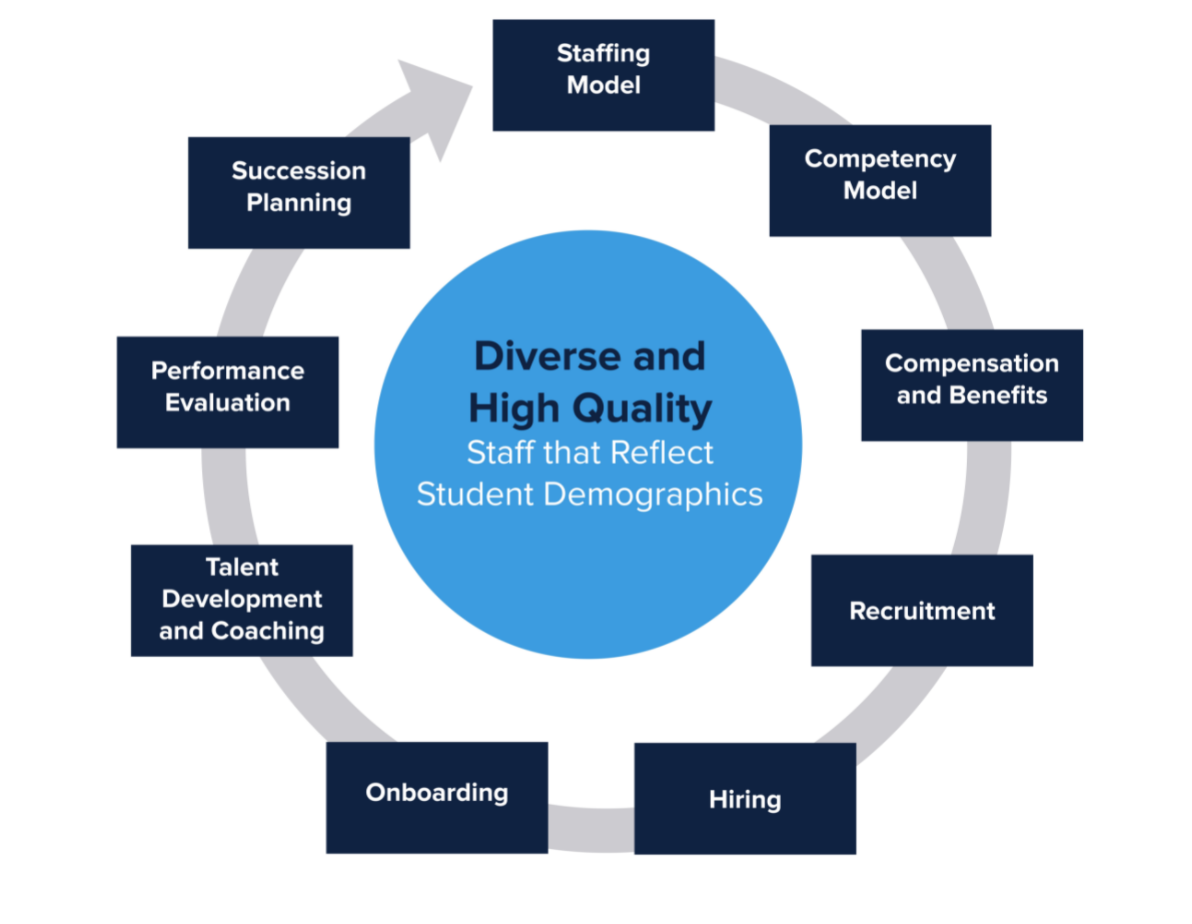
    • Codify anti-racist work at every point in the talent lifecycle and adjust EdFuel’s anchoring image accordingly.
    • Create supporting resources to foster alignment of our anti-racist work along the talent lifecycle.
  • Internal Priorities
    • Develop a way for team members to safely flag where and when we fall short of our anti-racist commitment as individuals or as an organization.
    • Begin to formally collect data on the types of organizations and leaders we work with, and analyze our impact by various sub-groups.

Update on Our Commitment as Education Support Partners
EdFuel’s Anti-Racist Pledge outlined a series of both internal and external commitments. Since the inception of this pledge, EdFuel has made strides to live out these commitments and ensure that we are actively working to keep the values of diversity, equity, inclusion, and antiracism (DEIA) top of mind in all that we do. On top of overhauling how we operate, we are committed to exploring ways that we can examine all of the work that we do through the lens of DEIA. Today we will share some of the actions that have taken internally related to the commitments outlined in our pledge.

1. Hiring and retaining diverse staff at all levels of the organization, detailed scorecards, and partner reviews at all points in the hiring process.

  • EdFuel has made progress on our hiring commitment by reviewing and updating our hiring profile prior to our most recent hiring process. We recently conducted a hiring process to find two new members to join our team. Though we have always sought candidates who operated with strong diversity, equity, and inclusion mindset, the hiring profile was further updated to prioritize the need for individuals who demonstrated a commitment to antiracism. This prioritization led us to share our pledge with candidates during our initial talks and ask for reactions and feedback. We also embedded questions and scenarios throughout the interview process to assess how candidates would think about anti-racist practices and policies both internally and in their potential work with clients.

2. Regularly setting aside time for the team to discuss questions, learnings, and challenges related to race and equity, e.g., continuing weekly team-wide equity and inclusion stepbacks, modeling and encouraging direct and open discussion on internal, external, or public topics related to race and equity.

  • Since we have publically shared our pledge, the EdFuel team has worked to utilize and refine existing internal mechanisms to further discuss questions, learnings, and challenges related to race and equity. We have continued to conduct our weekly “DEI Spotlight,” a standing item on our weekly team meeting agenda that allows team members to bring forth DEI-related learning, question, or challenge to discuss with the team that has come up in our work with clients or internally as an organization. Each week a different team member volunteers to pose the topic of discussion for the week, and takes 1-2 minutes to provide context, before opening it up to the team for thoughts, reactions, feedback, and sometimes even potential solutions. Over the past several months, as a team, we have dug deeper to ensure that the topics being discussed are more reflective and that we are examining and assessing all of our actions both internally and externally to ensure that they align with our anti-racist values. We have seen more robust conversation and the topics more closely reflect current events and challenges that many of our clients are facing, recent topics include:
    • How to address a client’s desire to accommodate for systemic and historical oppression via their compensation model
    • Local elections and the current socio-political landscape and its impact on client’s DEI and strategic planning work
    • Review/audit of the following internal structures to ensure alignment with our commitment to DEI and anti-racism
      • Client contract template
      • Onboarding
      • Team Norms

It is important to keep in mind that the DEI Spotlight is less about receiving a “correct answer” or concrete steps to solve a problem and more about creating a space for diverse thoughts and opinions with the expectation of there being formalized solutions.

We are eager to hear your thoughts and feedback on our work so far, so please let us know if you have any suggestions or input based on your own experiences or knowledge of us as an organization. Thank you in advance for sharing all of your thoughts and we look forward to this ongoing conversation!

A Guide to 3 Virtual Hiring Event Types

Many of you have expressed questions about moving your recruitment and hiring events to a virtual setting. Our Managing Partner, Kelly Gleischman, partnered with Nimble to put together some quick tips for three different types of virtual recruitment and hiring events that you may want to consider as you continue your work to attract a high-quality, diverse staff. Check out her blog and let us know how you are managing these types of events for your own organization!

As always, if you are looking for resources on virtual talent management practices check out our website for tools and links to prior webinars. Our goal is to continue supporting the sector with open-source materials, so please let us know if you have suggestions or thoughts on how we can best serve you.

Thank you so much for your continued support of our work. We deeply appreciate it!

EdFuel’s Guidance on Virtual Sourcing and Hiring

EDFUEL’S GUIDANCE ON VIRTUAL SOURCING AND HIRING

Written by: Kerri-Ann Neseth and Mary Mason Boaz


Even before COVID-19, teacher recruitment and hiring were a daunting challenge for schools and organizations seeking to hire diverse, high-quality talent and for candidates looking to find the right position. In the current climate, schools and organizations are now needing to make all recruitment and hiring efforts virtual.

We’ve heard from many of you about these concerns and at EdFuel, it is important to us to provide responsive support to the education sector whenever and however we can. To that end, we wanted to share our curated best practices on virtual recruitment, which includes sourcing and hiring candidates, for those of you who are facing these challenges during this time of uncertainty.

VIRTUAL SOURCING

Our top three tips for effective virtual sourcing of diverse, high-quality candidates include casting a wider net with job postings, bolstering employee involvement and investment, and attending virtual hiring fairs. See below for specific tactics related to each strategy.

Job Postings: Cast a Wider Net and Make Your Postings Pop

With more potential candidates working from home, now is the time to ensure your open positions are posted in as many places online as possible. In addition to posting to the sites you typically gravitate towards, ensure your postings are listed on subject-specific and even diversity-specific posting sites. For example, looking for a diverse math teacher? Try posting your position on the Association of Mathematics Teacher Educators and Educate ME Foundation job boards.

Before submitting your job descriptions to be posted, complete a quick audit to ensure they include your school or organization’s competitive advantage, or Employee Value Proposition, which will help ensure you stand apart from others. For example, you may offer a flexible working environment, or top-notch professional development opportunities. Let candidates know this by including it in your job descriptions! Click here to review two different examples of EVP within job descriptions. Note: There are many ways to structure a job description that can allow your EVP to pop (e.g. writing in first person, including narratives, pictures, day in the life descriptions).


QUICK TIP! Now that candidates can’t visit in-person you need to make your school or organization come to life online! Ensure that the Careers tab on your website is up-to-date and includes visuals of your school, staff, students, and families. Click here to review an example.


Employee Engagement: Bolster Involvement and Investment

During challenging times like this, people want to be in the know and provide support in order to be helpful. Given this, a key thing to do now is keep your teachers and staff engaged and build their ongoing investment (and ultimately their retention!) in your goals and priorities. So, how do you do this virtually? We’re glad you asked! Here are some suggestions:

  • Send a weekly e-newsletter to share pertinent updates, spotlight new best practices, and shout out staff members (staff morale booster!).
  • Double down on your referral strategy by sharing the top two priority positions you’re recruiting for this month and encourage staff to refer other great people.
  • Offer a prize (doesn’t have to be monetary) to the staff member that gets the most reposts or likes on a social media post related to your school or organization.

Ultimately, the goal with virtual employee engagement is to bolster involvement and investment by creating opportunities for teachers and staff to learn from one another and help you accomplish org-wide goals and priorities.


QUICK TIP! When possible, include new hires on employee engagement tactics as a strategic part of their onboarding process. Click here to review a sample new hire e-newsletter.


Virtual Job Fairs: Continue Putting Yourself Out There Virtually

Can’t attend that career fair that you recently registered for because of social distancing? Same. However, the good news is that where there’s a will, there’s a way. In order to continue advertising your current hiring needs (and your Employee Value Proposition!), register for and attend virtual job fairs.

At EdFuel, we understand the importance of creating virtual spaces for schools and organizations to connect with one another and have the expertise to do so effectively. Reach out to us if you’re interested in hosting a virtual job fair in your city!


QUICK TIP! EdFuel is hosting virtual job fairs in several cities this spring/summer. If you’re interested in sponsoring one in your region, contact us for more details.


HIRING VIRTUALLY

Our top three tips to effectively evaluate and select candidates virtually include investing time on the front-end to make virtual possible, leaning in to transparent messaging, and reducing risk by unpacking virtual biases (they totally exist!). See below for specific tactics related to each strategy.

Investment: Making Virtual Possible

An important thing to keep in mind during this time is that your current hiring process, which is more than likely anchored in having an in-person interview, will need some adjustments before it can be successfully implemented virtually. This means that you’ll need to invest time on the front end to ensure that everyone involved in the process is aligned and moving forward together to accomplish hiring goals.

Here are some key tactics to set a solid foundation for and build investment in making virtual hiring possible:

  • Document the new, virtual process and make sure key players are aware of it: This includes sharing the process with candidates who may also be new to virtual hiring processes.
  • Train those involved on how to navigate the virtual process and ensure mindsets and practices are aligned.
  • Double down on your hiring profile for quality and equity: During challenging times it can be easy to make decisions that don’t necessarily align with your needs in an effort to act quickly.
  • To avoid groupthink and ensure inclusion, reflect and score interviews individually before coming together to share takeaways and make final hiring decisions.

Messaging: Virtual Transparency and Vulnerability

Now more than ever, it is important to be ultra-communicative to candidates so that you are setting them up for success. A key way to do that is to be transparent and vulnerable about how you are feeling related to navigating a virtual hiring process.

  • Share the agenda and virtual norms ahead of time (e.g. video on, business casual attire).
  • Align on constraints that candidates may be facing and how you will manage them (e.g. allowing flexibility for candidates who may have dependents at home or may not have access to video).
  • Name the newness of the process for everyone (be vulnerable!) and that there may be additional follow-up.
  • You can find two sample email templates for inviting candidates to the virtual interview and sample teach here.

For example, you may share with a candidate “This is new for us. As a school used to doing in-person demo lessons I want to name pretty candidly that this might not be as smooth of a process as we iron out the kinks of hiring virtually. You may be feeling nervous about the virtual interview, and we’re also a bit nervous because we want to get this right too. Please let us know what we can do to make you as comfortable as possible. Is there anything you’re feeling nervous about or want to flag for us that might come up during the interview?” By communicating transparently, you’ll model for candidates what the expectation is on your team as it relates to building trust.

Reducing Risk: Unpacking Virtual Bias

Bias can creep in quickly in virtual settings, and in ways that you may not quickly realize. Do you prefer for someone to have a plain wall as their background when you meet with them virtually? Are you noticing whether or not the desk or shelf behind them is cluttered? In order to avoid virtual interviewing bias, you’ll first need to identify your biases and then and develop intentional ways to work against them.

  • Identifying Virtual Recruitment Bias:
    • Complete a 5-minute activity where your write down all of your recruitment biases. Afterward, add a lens to identify how they may show up virtually.
    • After each virtual interview, jot down things that came to mind as you spoke to the candidate, unrelated to the core competencies needed for the role. Be aware that these may also be related to your virtual biases.
  • Mitigating Virtual Recruitment Bias:
    • Lean into hiring profiles now more than ever and anchor your interview ratings in the core requirements for this role (Find sample hiring profiles, rubrics, and interview guides here).
    • Where possible, record interviews (make sure to let candidates know in advance) so others can gut check your ratings and give you feedback.

If you have questions about any of these tips or are interested in adapting your recruitment and hiring processes in this virtual landscape, check out our website or reach out for more specifics (info@edfuel.org).

Cortney’s DEI Spotlight:  Designing Inclusive Talent Systems with “Bringing Your Whole Self to Work” in Mind

Cortney Graham | December 18, 2019


Do you remember that time you laughed and joked about the latest meme floating around Instagram with your favorite coworker, letting your hair down and turning your “professional persona” off for a bit? After “getting your life” at lunch, you later transformed back into your “professional” persona for your big pitch to the leadership team?

It’s something that many people do, almost organically, when transitioning between home and work or friend and current/potential colleagues.  But why?  In a work environment, particularly in the education sector, where “bringing your whole self to work” is encouraged, this shouldn’t be necessary. There’s a name for this conscious, sometimes unconscious, shift in behavior: code-switching. Code-switching is defined as the “process of shifting from one linguistic code (a language or dialect) to another, depending on the social context or conversational setting.”  The term code-switching can also be used more broadly to describe subtle shifts in how individuals express themselves in different spaces.

The author of Bring Your Whole Self to Work, Mike Robbins, says: “When we don’t bring our whole selves to work we suffer – lack of engagement, lack of productivity, and our well-being is diminished.  We aren’t able to do our best, most innovative work, and we spend and waste too much time trying to look good, fit in, and do or say the “right” thing. For teams and organizations, this lack of psychological safety makes it difficult for the group or company to thrive and perform at their highest level because people are holding back some of who they really are.”

In the final installment of our DEI series, this month we are exploring the concept and importance of bringing your whole self to work in relation to code-switching, and the potential bias that can emerge as a result. Code-switching is a common behavior across all sectors, private and public.  It is so common that in 2013, NPR launched a blog, which has since also become a podcast, called CodeSwitch. The CodeSwitch team was created to cover race, ethnicity, and culture in the different spaces members of the CodeSwitch team inhabit, and the “tensions of trying to navigate between them.”  

In their inaugural blog post, the CodeSwitch team referenced examples from President Obama saying “Nah, we straight” to an employee while dining at a popular D.C. restaurant, to Beyonce breaking her superstar persona to trash talk over a game of pool with friends, as evidence that literally everyone code-switches to some extent.

The Challenge

According to the Learning Policy Institute and countless others, a “positive school climate can improve academic achievement”.  We also know that in large part school climate depends on the wellness of adults, which suffers when they can’t be their authentic selves.  In some ways, code-switching is the opposite of bringing your whole self to work. 

This blog post will discuss how leaders can take proactive steps to operationalize the notion of bringing your whole self to work by ensuring that they encourage difference and limit the need for secret code switching. Specifically, bias based on someone’s appearance or speech is particularly common when it comes to hiring and selection.

Have you ever interviewed a candidate that had a strong resume and stellar references, but when you interviewed them you had a hard time connecting to their personal experience? How should hiring managers account for this in the interview process? Often times when interviewing candidates, the hiring manager may be listening for education buzz words. But does using different words to describe the same concepts  mean that the candidate is unqualified for the position?

The failure to prepare for these scenarios  may lead to hiring bias. In a similar vein, recent headlines and social media influencers  discuss African-American women who have been discriminated against when applying for jobs, because employers have taken issue with their natural hair. I always thought that being a young African-American woman in the workplace automatically meant that I would have to offer up another version of myself when interviewing to be accepted and respected. But do I? Should I have to?

I say, no. In an ideal world, I and job seekers, in general, should be able to be our authentic selves when interviewing. If we are capable, confident, and qualified there should be no need to adjust language and behavior in a way that forces you to code-switch. Despite my personal sentiments, I know and understand that the reality is that in many organizations people are penalized for bringing their whole selves to work. Hiring processes are often riddled with blindspots that allow bias to sneak in, hence the need to code-switch. While we hope and continue to strive to live in a society that universally promotes the idea of bringing your whole self to work, I realize that for many people this is difficult to do out of fear of repercussions. 

The Solution

Employers must design equitable and inclusive hiring and selection processes that keep code-switching and eliminating bias top of mind, while continuing to uphold those standards after people are hired and continue to bring their whole selves to work.  Here are some ways you can take steps to build inclusive talent systems that keep bringing your whole self to work in mind:


  • Provide anti-bias training and guidance to the hiring team: Everyone is biased in some way. However, we should be conscious about how we understand and mitigate those biases.. When designing your hiring and selection processes, work to minimize bias by training all staff involved in the hiring process before interviewing candidates. Provide staff with training in implicit bias and cultural competence. You can start with a self-assessment tool such as the Harvard IAT test. Shenendehowa Central Schools, a public school district in New York, has employed an anti-bias hiring video. The video “assertively states that the district is looking to hire for diversity and to ensure interview committees are aware of bias, in an effort to reduce their own bias.” By actively working to eliminate and expose bias on the front end, during the interview process, interviewers are more keenly aware and can work to ensure that bias is not a major factor in their decision to hire or not hire a candidate. 


  • Conduct a ‘gut check’ for content over delivery.  When interviewing candidates, don’t fret if you don’t hear certain buzzwords. The jargon can be learned and picked up later if absolutely necessary for success on the job. Pay more attention to the content of what the candidate is saying. Though it may not be packaged the way you are accustomed, ask yourself how that skill or mindset could be beneficial to your organization and what value the individual could potentially bring to your team. If you feel bias creeping in, check it! At EdFuel, we recommend that the hiring panel complete a “gut-check” after scoring candidates during their interviews. The gut-check is simply a self reflection exercise that the hiring panel engages in to ensure  that the candidate is being judged by their credentials and overall capability to do the job rather than the interviewer’s personal opinions. Questions may prompt the hiring panel to consider in what ways the candidate can contribute to the team or may excel based on their overall qualifications and experience. Once the gut-check is completed, reconcile the responses against the candidate’s overall rating on a comprehensive rubric. Both the gut-check questions and rating should be reflective of each other; if they are not, hiring panels should stop to consider what went wrong. 


  • Do the work to build your organizational culture and employee value proposition (EVP). EVP is the reason people come to your organization and is ultimately the reason why they decide to stay. Compensation, organizational mission, working environment, and opportunities for professional growth are not enough individually to keep people at your organization. The four elements must work in concert. When building your organizational culture and EVP, make it a point to build an environment that is open and accepting of the differences that exist within your organization. Check your biases at the door and talk about having a diverse hiring team. While this is not always possible you CAN proactively identify the potential biases of the hiring staff for a given candidate, make a note of them and check for them when scoring candidates, or seek an outside opinion in the areas that are particularly ripe for bias.


JOIN THE CONVERSATION

These are my thoughts on why building talent systems that promote bringing your whole self to work are  important. What do you think? Join the conversation with me and the rest of the EdFuel team on email, Twitter or Instagram.