





Retention Strategy & Incentives
Hiring strong staff is only part of building a stable organization. Many organizations struggle to keep talented employees over time. An employee retention strategy helps organizations understand why staff stay or leave and design systems that improve engagement, growth, and long-term commitment.
EdFuel helps leaders design retention strategies and incentives that encourage engagement, recognize contributions, strengthen growth pathways, and support long-term commitment. The result is greater organizational stability, stronger morale, and reduced disruption from turnover.









Even strong organizations can struggle to retain great people. Leaders may notice experienced staff leaving or hear questions about long-term growth.
Over time, turnover disrupts momentum and shifts focus away from the work that matters most. Retention strategy work helps leaders understand what encourages strong staff to stay and how to strengthen those conditions intentionally, drawing on their staff’s lived experiences.
When Organizations Turn to Retention Strategies and Incentives
Common signs include:

Experienced staff leaving

Newly hired staff leaving in the first couple of years

Leaders are spending more time replacing staff

Staff seeking clarity about growth opportunities

High performers are recruited away by other organizations

Teams are losing momentum during turnover

A desire for stronger long-term team stability

The Challenges We Address
Retention challenges often emerge when there is a gap between what motivates employees and what organizations provide. An effective employee retention strategy helps organizations identify and address these gaps before they lead to turnover. Even in mission-driven environments, unclear growth opportunities or recognition can lead strong staff to explore other options.
Our work helps leaders understand what influences staff engagement and translate those insights into a clear retention strategy that strengthens commitment and long-term team stability.
The challenges we solve:

Staff turnover where the underlying causes are not fully understood

Strong staff are exploring external opportunities before anyone sees it coming

Unclear or inconsistently communicated growth opportunities

Recognition practices that are informal or uneven across teams

A reactive approach to turnover rather than a proactive retention strategy

Burnout is reducing engagement and team momentum



What You Get
Our work results in a clear, actionable retention strategy supported by practical tools and frameworks that leaders can implement and sustain over time.
-
Retention analysis identifying patterns, trends, and key drivers of turnover
-
Targeted strategies for high-impact roles
-
Incentive and recognition programs aligned to what motivates and retains staff
-
Career pathways that clarify growth opportunities and progression
-
Leadership practices and strategies to strengthen engagement and day-to-day experience
-
A prioritized retention action plan with clear next steps and ownership









How We Approach This Work
Strengthening retention requires translating insight into action through a process that connects data, employee experience, and organizational context. While the steps below reflect our typical approach, we adapt and move between them as new insights emerge.

-
Diagnose
We analyze retention patterns, staff feedback, and organizational context, such as turnover data, engagement insights, and employee experience, to understand current challenges and identify where employees are most at risk of leaving.
-
Design
We identify the key factors influencing retention and develop targeted strategies that address employee needs, motivations, and organizational priorities, with a focus on incentives, growth pathways, and engagement strategies.
-
Align
We partner with leadership to ensure retention strategies align with culture, management practices, and broader organizational goals, while remaining feasible within operational and budget realities.
-
Implement
We support leaders in translating retention strategies into clear, actionable steps that can be consistently applied across teams, including communication, manager practices, and rollout planning.
-
Sustain
We provide tools and systems to monitor retention trends, track engagement, and continuously refine strategies, ensuring leaders can adapt as needs and priorities evolve.



Ready to move beyond reactive retention efforts?
Design intentional incentives and systems that build long-term commitment.


What This Looks Like in Practice
Arizona Autism Charter Schools (AZACS) partnered with EdFuel after experiencing rising staff attrition in a highly staff-intensive model. Leadership wanted to strengthen how the organization supported employee growth and engagement from the moment of hire.
EdFuel helped design a retention strategy and operational plan that included structured onboarding, manager “stay conversation” tools, and a strategic talent calendar to guide implementation throughout the year.
As a result:

AZACS saw a 15% improvement in staff retention
Managers gained practical tools to support employee engagement and growth
Leadership established clear processes to strengthen retention from hiring through tenure
The result was a more proactive approach to retaining high-performing staff and maintaining stability across the organization.

FAQs
What is an employee retention strategy?

An employee retention strategy is a structured approach that helps organizations understand why employees stay or leave and design systems that improve engagement, growth, and long-term commitment.
Do retention strategies always involve financial incentives?
Not necessarily. While compensation can play a role, effective retention strategies also include communication, leadership opportunities, career pathways, recognition practices, onboarding improvements, and leadership habits that support staff growth.
How do you determine why employees are leaving?
We review retention data, leadership insights, and staff feedback to identify the key factors influencing why employees stay, leave, or consider other opportunities. Staff feedback may include anonymous surveys, facilitated focus groups, and one-on-one interviews, ensuring we capture a broad range of perspectives and experiences.
Can retention strategy work alongside other talent initiatives?
Yes. Retention strategies often complement work in compensation design, performance management, or workforce planning to ensure talent systems align and reinforce one another.
Is This Right for You?
This work can be valuable when organizations want to better understand what helps strong staff stay and how to build the conditions for long-term commitment.
-
You’re experiencing higher-than-expected staff turnover
-
You need stronger strategies to retain high-performing employees
-
You want to strengthen long-term team stability and continuity

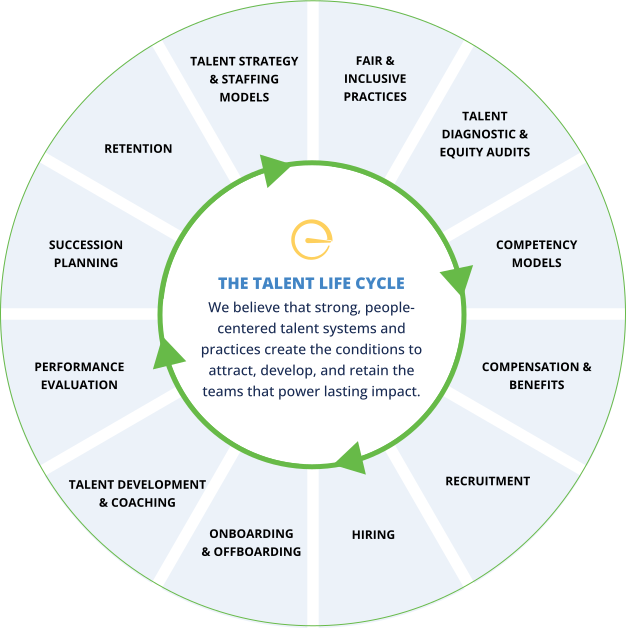
Retention strategy often connects with other parts of an organization’s talent systems. Many partners explore related work such as compensation design, leadership development, or performance management to address the broader factors that influence why staff stay.




From Talent Talks Blog
Explore practical insights on strategic workforce planning, compensation design, performance management,
and leadership development across education, mission-driven, and nonprofit organizations.
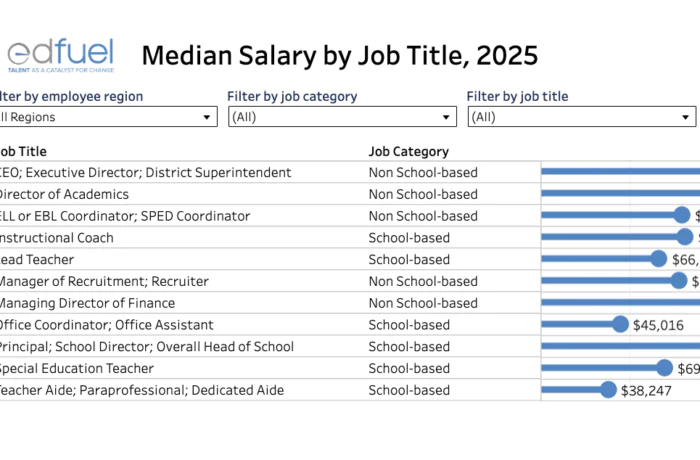
Compensation Is How Schools Show What They Value. Are We Paying Attention?
Nicole Pratt | June 2026 Early in my career, I was known as the “survey lady.” I couldn’t be in every room to ensure high-quality training for teachers across a whole state. So I learned to rely on surveys, and ultimately data, to understand what was happening. The data helped me see where things […]
Strategic Staffing in a Season of Disruption: What It Really Takes to Build Stability
Kerri-Ann Pitts | April 2026 Dear EdFuel Community, A year ago, I wrote what became one of the most vulnerable reflections of my career — leading through a reduction in force and what it required of me as a people-centered leader. I wasn’t sure how it would land. But the response told me something important: […]

Leading in the Tension: What It Takes to Support Teams Amid Uncertainty
Nicole Pratt | February 2026 Every year, the first sign of spring for me isn’t the green grass or leaves on the trees, it’s the daffodil leaves. Thin green shoots pushing up when the air still feels cold and the ground looks unchanged. They’re easy to miss, but once I notice them, I know something […]
